
I know I’ve been away. I miss you all, and I miss writing. Life has been full — I moved myself to one place and the kid to another, and I spend a lot of time at Riverwood, the land I have in Maine. Then of course there is all the usual nonsense of daily living while democracy is under siege. I have several drafts of longer blogs that I can’t manage to finish, so I’m throwing this one out there to get back in the game. We’ll see if it works!
Before I do, though, I am very thankful for the midterms. I confess I was unable to even be cautiously optimistic. But it turns out that it takes a thousand abuses, high cost of living and a war to bring people around. So thank you to everyone who engaged, and a quick reminder that we need to keep being engaged. This is not one and done. If you are looking for a way to contribute and you are short on time and energy, I recommend the Americans of Conscience Checklist. It has concrete actions you can take, while also offering good news to help keep everything in perspective. Let us keep the Dems on track and soldier on!
So on to Ping. This summer I was walking to the train from work. It was raining and people were having a day. It seemed like there was more angry car honking than usual, and the people on the sidewalk looked grim. But then I looked up and saw a guy wearing a t-shirt that said PING. It was the all caps that caught my attention. Lucky for me I live under a rock, so I only had one association with the word, and happily, it took me way back to my childhood, a genuine transportation of imagination that I haven’t felt in years.
It recalled me to a beloved picture book about a duck named Ping. I was no longer in the rain, with cars honking and people scurrying. I was sitting with this book, The Story about Ping, my childhood laser focus on the mesmerizing illustrations. I floated all the way home with a smile, and reserved the book from the library. A few days later I walked to the library to pick it up, full of pure child-inspired delighted anticipation. I was going to meet up with a long-lost beloved friend. I approached the reserve shelf and quickly passed by the other last names: Dab, Das, Deb, and there it was. Holding the book in my hands and seeing the cover again connected me right back to that happy place, and it didn’t feel like a long time ago, but a short time ago. A time when we went to the library every week and I exchanged my stack of 8 books, the lending limit, with a new stack of 8 books. And with this book, this white American child from Connecticut visited an amazing place called the Yangtze River.
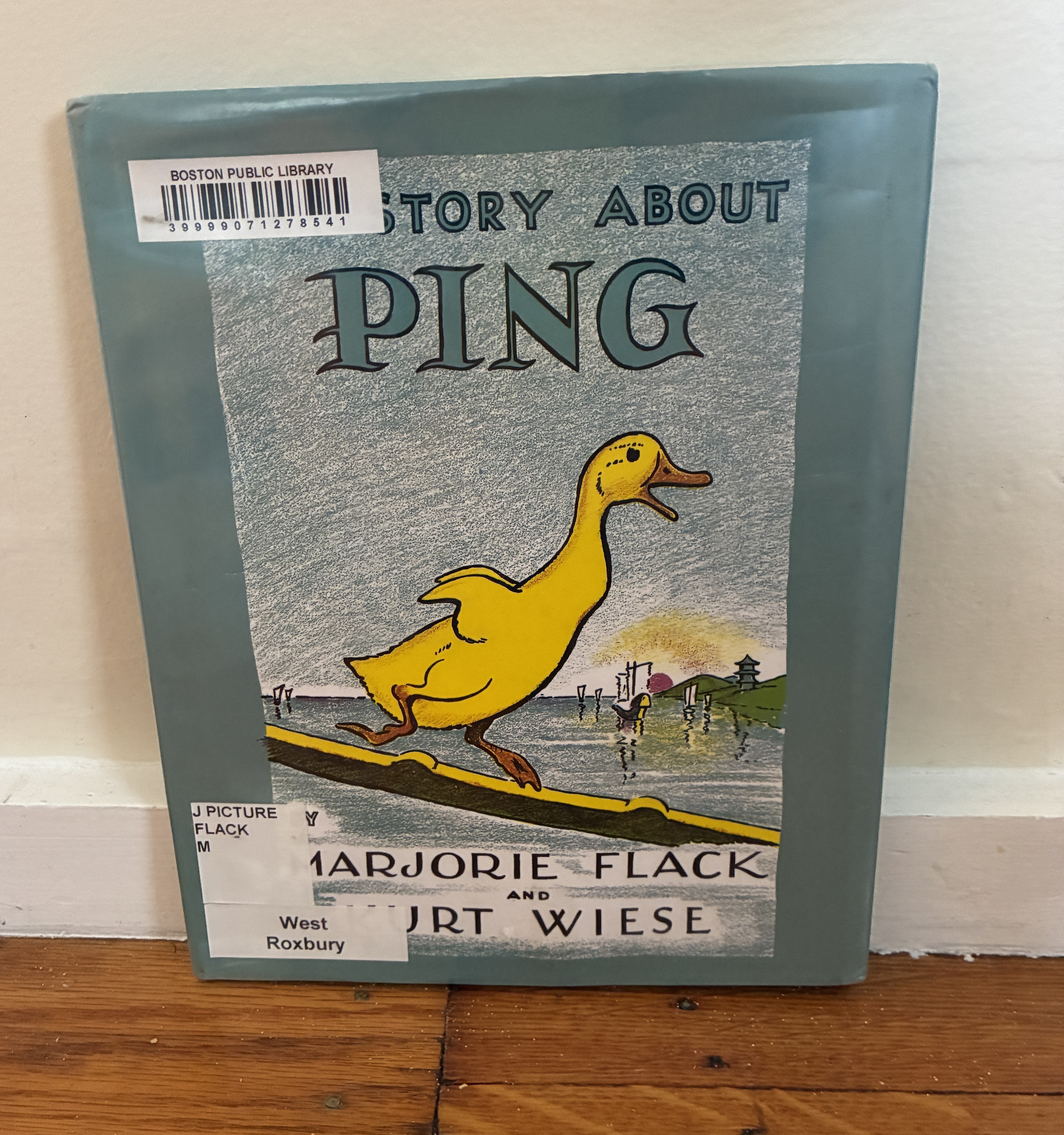
I nearly skipped out of the library, and as soon as I got home, I read it, quickly, then again, slowly, and then lost myself awhile in the beautiful illustrations that had captivated me as a kid.
Ping is a young duck who lives with parents, siblings, aunts, uncles, and cousins on a “wise-eyed boat” on the Yangtze River in China. He doesn’t want to receive a whack from a stick by the boat owner by being the last duck on the boat, so he stays in the grass and watches the boat move on without him. And of course adventures ensue.
I remembered the story as I turned the pages, but then I got to the page showing a little boy with a barrel tied to him. His family lowers him in the river and he catches Ping.
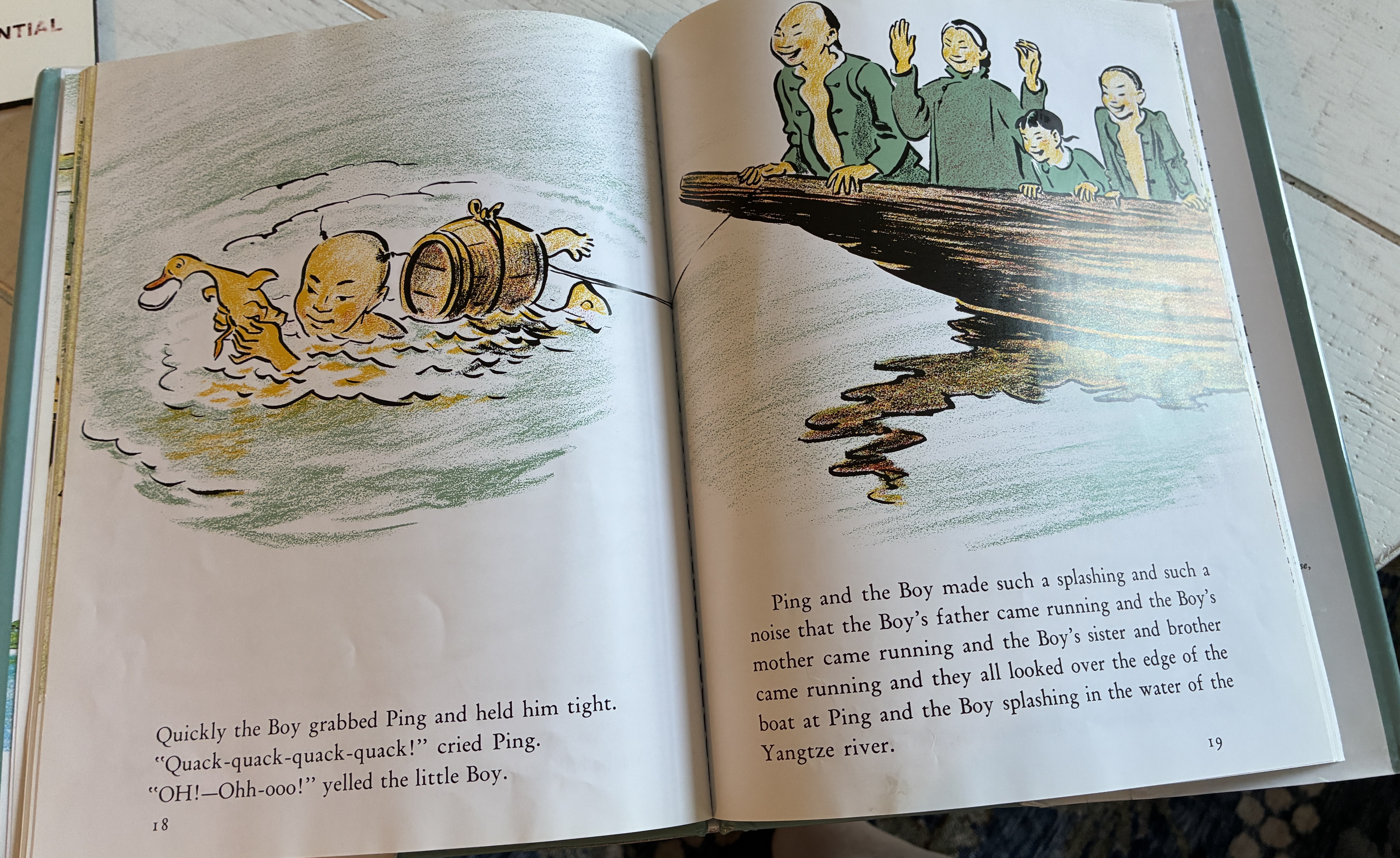
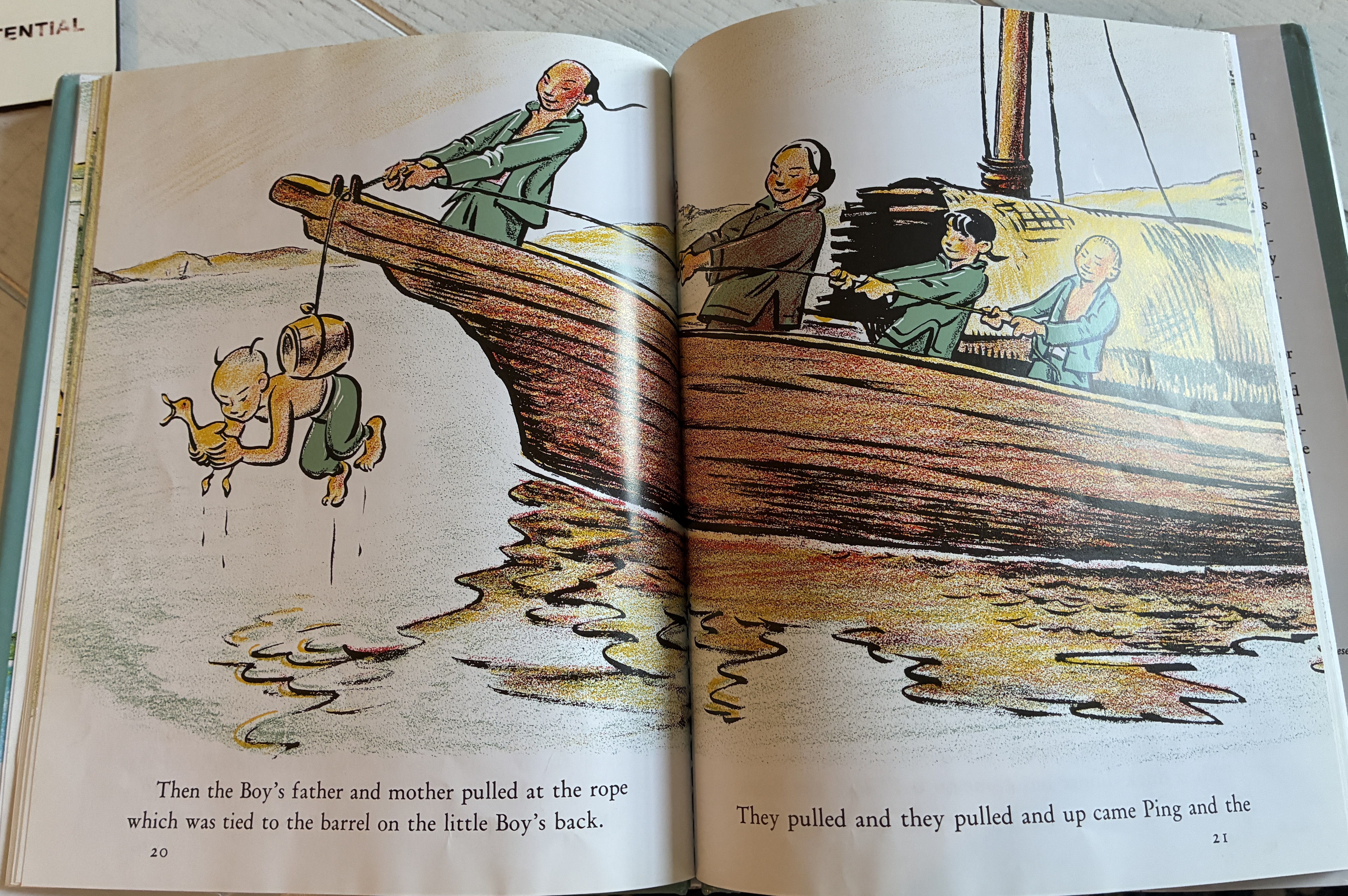
The boy’s little braids and that barrel fascinated me. The simplicity of the ties and how that barrel must have felt on his back, tied with a rough rope. It seemed like it would be uncomfortable, but the boy seems unaffected by it. I was curious about a family that lowers a little boy in the river with a barrel, and he does it easily and willingly. I hadn’t remembered that exact page until I saw it, and then there it was — the delight and something visceral about the illustration texture and coloring and a life so different from mine. It still has a hold on me all these years later. It feels stored away safely in my bones, beyond even the story’s words.
It was all serendipitously wonderful. That it so easily cut through all the day’s modern noise, political unrest, and ubiquitously draining electronics reminded me of the power of books and art. They are our superheroes if we let them, and not just the ones we consciously remember, but the ones that have been stored away for future discovery.
So, thank you, unknown man with a PING t-shirt. I have since learned PING is a logo for a golf equipment company. But it will always remain for me a story about an adventurous duck and a boy swimming with a barrel tied to his back.
From Wikipedia: The Story About Ping is an American children’s book written by Marjorie Flack and illustrated by Kurt Wiese. First published in 1933, Ping is an illustrated story about a domesticated Chinese duck lost on the Yangtze River.[1] Based on a 2007 online poll, the National Education Association listed the book as one of its “Teachers’ Top 100 Books for Children”.

